
Visibility, Trust, and Impact: Brand Challenges in the AI and Digital Media Landscape
03/Apr/2026
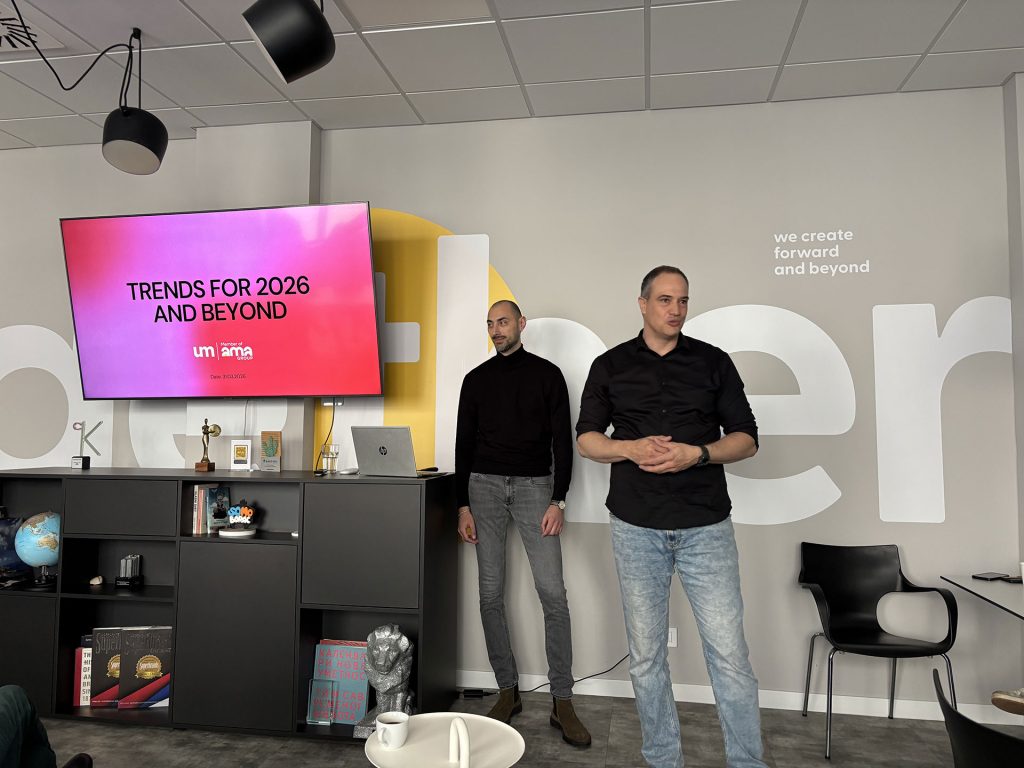
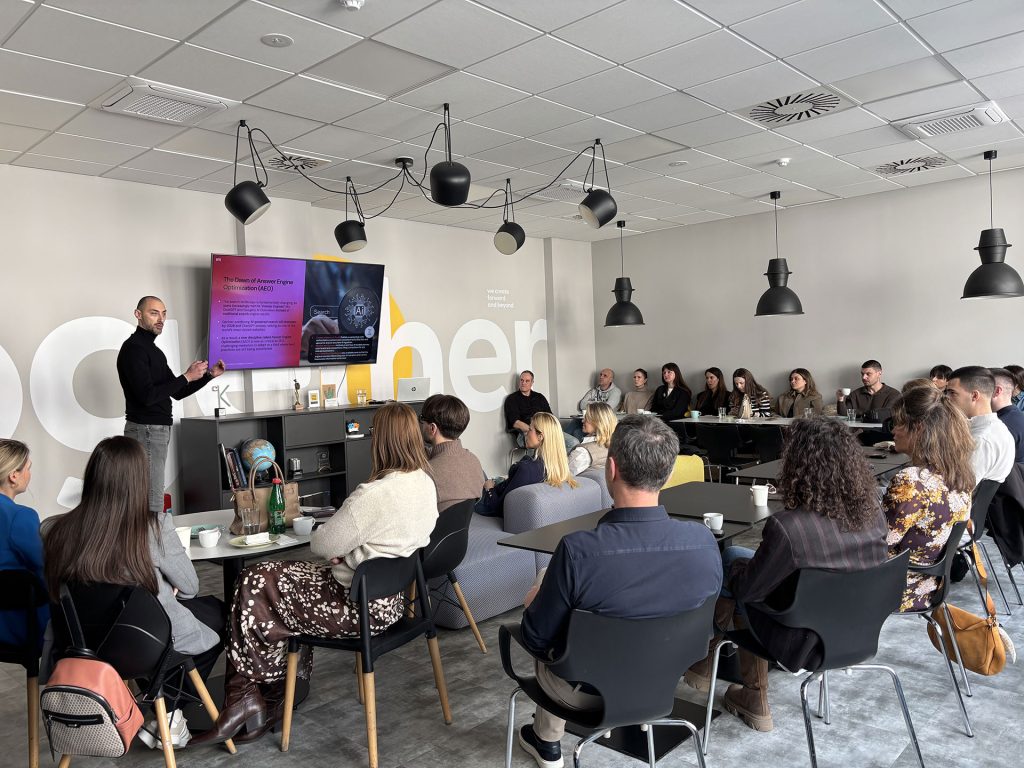
In a digital environment where online trends no longer evolve gradually but instead emerge and disappear at the speed of scrolling, brands are entering a new era in which the rules of visibility, influence, and reputation are being fundamentally redefined by artificial intelligence (AI). These changes have been analyzed by UM Beograd, a member of AMA Group, through short timeframe an in‑depth review of key shifts in the media and communications ecosystem, with the aim of identifying trends in digital channels and AI technologies that will shape brand strategies in the years ahead.
New Rules of Visibility in the AI Era
One of the most significant shifts relates to the transformation of search. Traditional search models such as Google Search are increasingly giving way to so‑called answer engine environments, where users obtain information directly through AI tools and large language model (LLM) systems such as ChatGPT and Claude.
In this context, SEO (Search Engine Optimization) is evolving into a new discipline-Answer Engine Optimization (AEO)-which involves actively managing how AI systems understand and represent brands across search results and AI‑generated answers.
This shift has a direct impact on reputation management in the age of artificial intelligence. AI‑generated content, deepfakes, and false narratives spread faster than ever before, while corrections often fail to achieve the same level of visibility.
In such an environment, brand reputation can be compromised in a very short time frame, with long‑term consequences for consumer trust and market value. As a result, narrative management is becoming less about occasional reactions and more about a continuous process of monitoring, adaptation, and the development of credible information sources within the AI ecosystem.
From Popularity to Real Value
The creator economy is moving away from a popularity‑driven logic and entering an era of measurable effectiveness. Influence is no longer assessed primarily through view counts, but through tangible contributions to business results-reshaping the role of creators from mere media channels into genuine value generators.
This shift affects the entire ecosystem: creators are increasingly positioned as sustainable business partners, while brands gain clearer criteria for evaluating value and scaling collaborations based on performance rather than reach alone.
Hyper‑personalization is also entering a new phase of development. Instead of relying on basic demographic data, communication is increasingly based on a deeper understanding of individual values, interests, and behaviors. Advances in AI application enable the scaling of such approaches, but they also raise audience expectations-making it easier than ever for consumers to distinguish between relevant, contextual messaging and generic, automated communication.
Channels Are Changing, Expectations Are Rising
Social media platforms are increasingly taking on the role of search engines, especially among younger generations who discover information, recommendations, and brands directly within these platforms. In this environment, content is no longer just a tool for engagement-it becomes a key driver of visibility and brand understanding.
Simply being present across many channels is no longer sufficient. UM Beograd emphasizes that brands are expected to deliver communication that is both consistent and contextually adapted, which is why multi‑channel storytelling is increasingly thoughtful message orchestration rather than simple repetition.
Video continues to assert itself as the dominant communication format, but with a growing need to adapt to different attention patterns. Short‑form formats play a role in discovery and sparking initial interest, while longer and serialized content enables deeper audience relationships and fosters loyalty.
A shift from trend jacking to trend shaping is also becoming evident. Merely following viral phenomena increasingly leads to a loss of authenticity, while brands that actively participate in shaping cultural narratives and creating original ideas generate long‑term value.
Special attention is also drawn to the rise of virtual influencers and AI‑generated identities. While they offer a high level of control and scalability, their use raises questions of authenticity and trust-making decisions about their deployment increasingly dependent on audience values and the context in which they appear.
The conclusion is clear: in the years ahead, brand success will depend on the ability to connect technology, data, and human expertise into a coherent and consistent system. Artificial intelligence is becoming a strategic partner-but it is people who continue to make the difference, through their understanding of context, culture, and the values that underpin every trend.